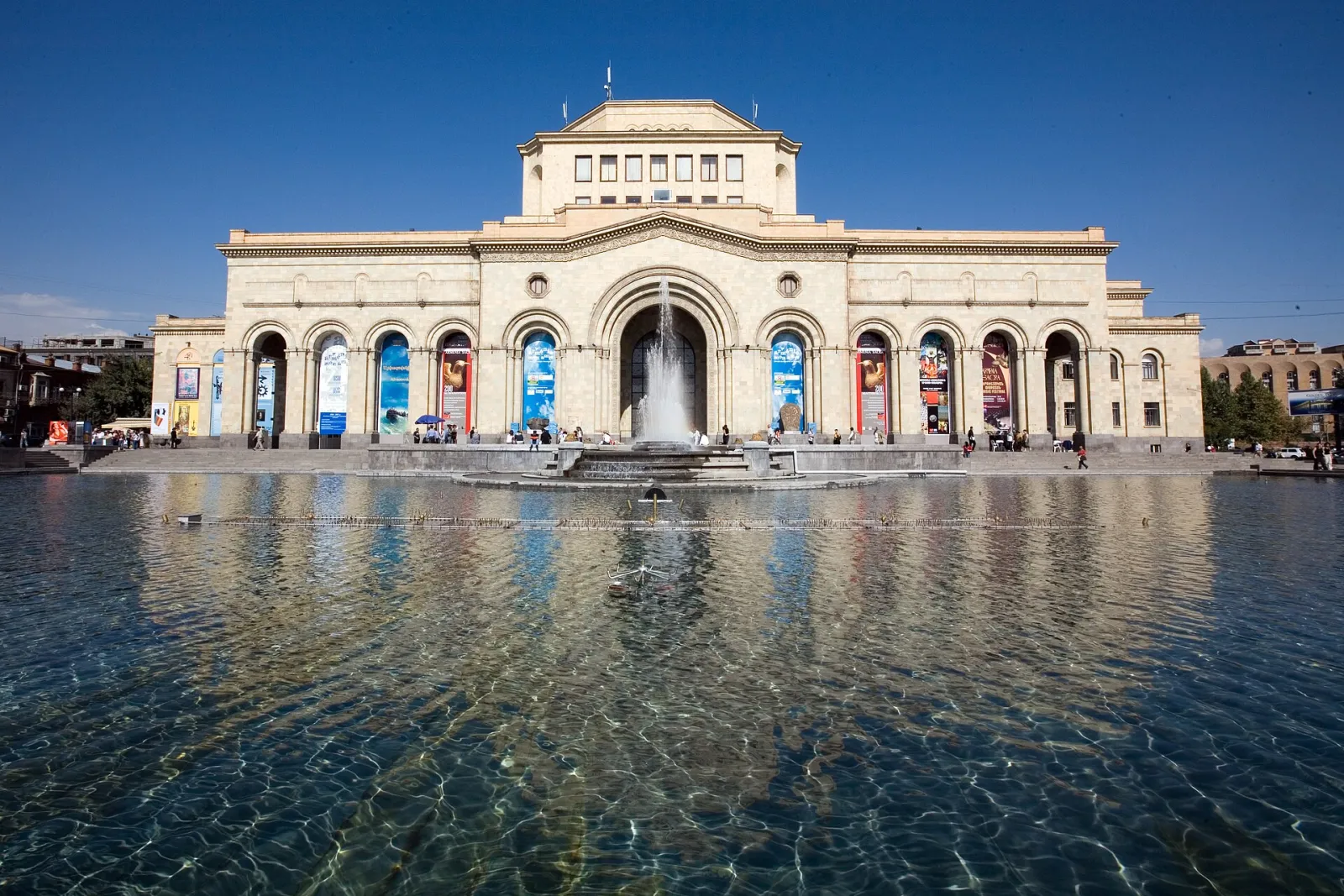
Aleksey Chalabyan a.k.a Xelgen, CC BY-SA 4.0
History Museum of Armenia and National Gallery
Two national museums in one building on Republic Square: Armenian history from the Bronze Age, and the country’s largest art collection.
The story
The great building on Republic Square houses two national museums. The History Museum of Armenia was founded in 1919 and opened in 1921; its 400,000 objects cover the country from prehistory to modern times. Highlights include the Bronze Age goblet and jewellery from Karashamb, wooden carts of the 15th–14th centuries BC from Lchashen, Urartian bronzes from Karmir Blur, and the stone of 782 BC in which King Argishti I records the founding of Erebuni — the birth of Yerevan.
The National Gallery of Armenia, founded in 1921, is the largest art museum in the country, with around 42,000 works and 56 halls. It keeps fragments of medieval frescoes from Lmbatavank, Tatev and Akhtala, more than 60 canvases by Ivan Aivazovsky, Armenian painters such as Martiros Saryan and Vardges Sureniants, and European works by Donatello, Tintoretto, Chagall and Kandinsky.
What to see

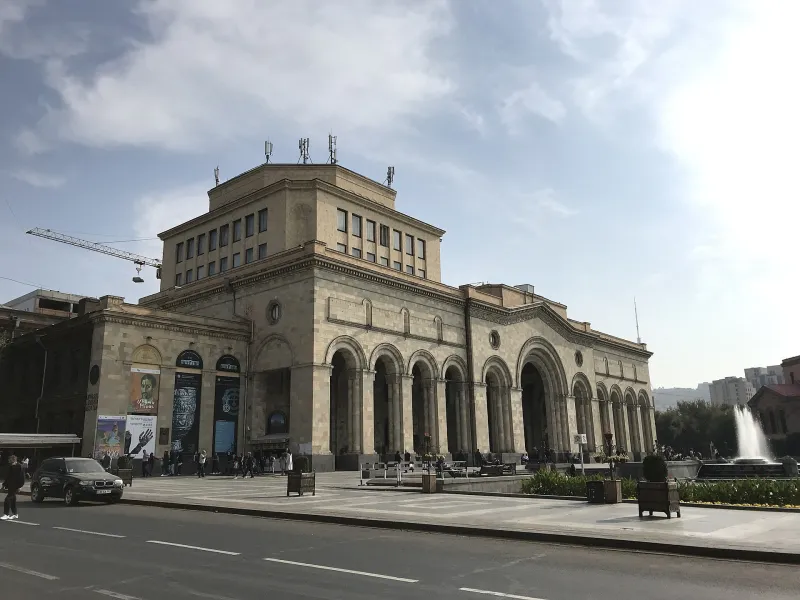
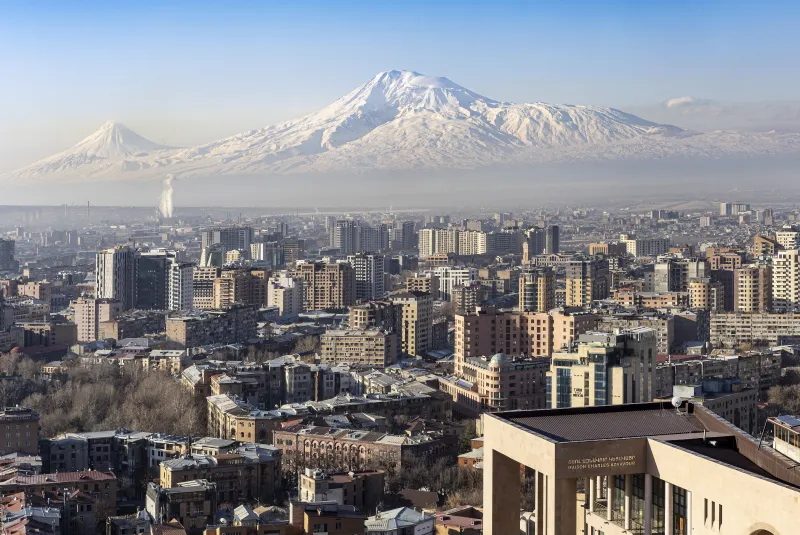
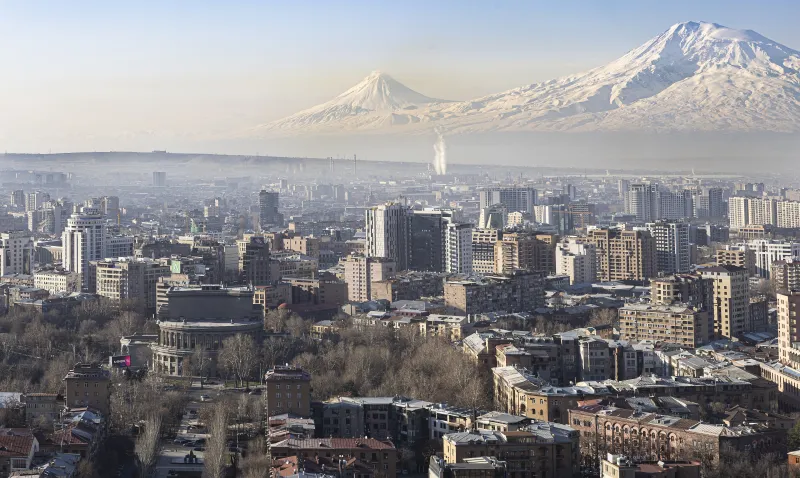

Photos: EvgenyGenkin, CC BY-SA 4.0 · Textfabrikant, CC BY-SA 4.0 · Aleksey Chalabyan a.k.a Xelgen, CC BY-SA 4.0