Armenia’s UNESCO World Heritage sites
Etchmiadzin and Zvartnots, Geghard and the Azat valley, Haghpat and Sanahin — and the duduk, khachkars and lavash on the intangible list.
MarzMap · November 17, 2026 · 2 min read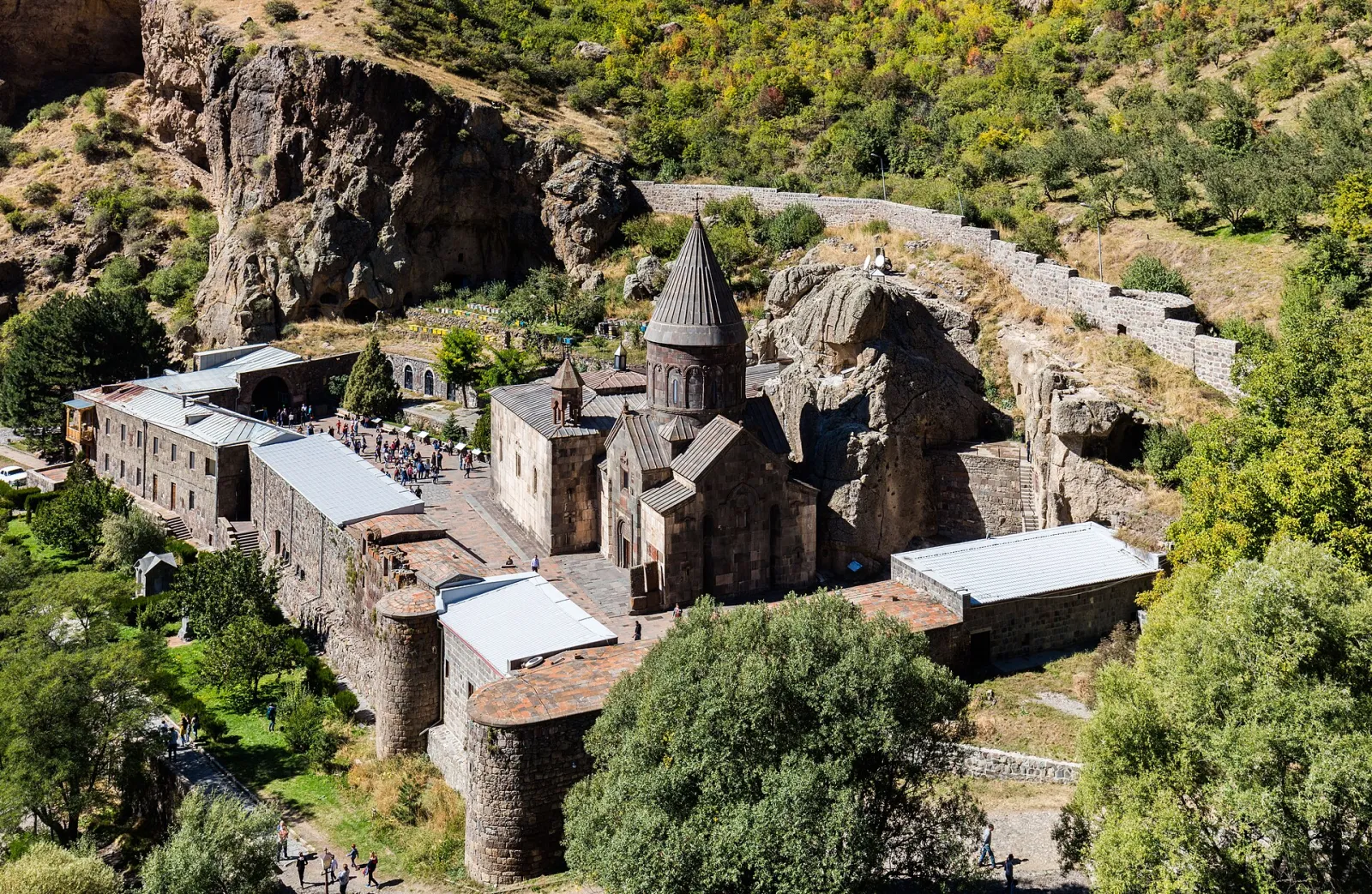
Armenia has three sites on the UNESCO World Heritage List, all of them monasteries and churches: Haghpat and Sanahin in the north, the cathedral and churches of Etchmiadzin with the ruins of Zvartnots near Yerevan, and the monastery of Geghard with the Upper Azat Valley. Seven more sites are on the tentative list.
Etchmiadzin and Zvartnots (2000)
Etchmiadzin Cathedral, founded around 301–303, is the mother church of the Armenian Church and one of the oldest cathedrals in the world. The listing also covers the churches of Saint Hripsime (618) and Saint Gayane (630) in the same town, and the ruins of Zvartnots, a round three-tiered cathedral of 643–652 that collapsed in the 10th century.
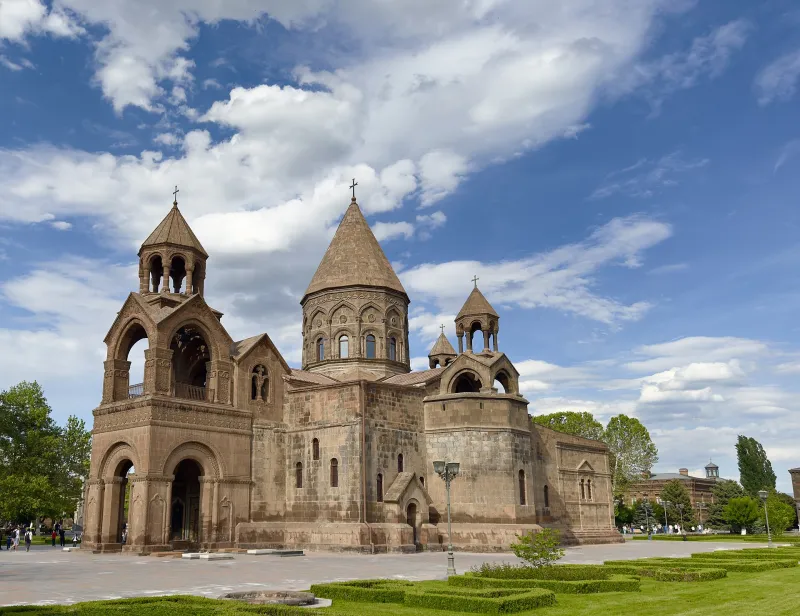
Etchmiadzin Cathedral
ArmavirMother Cathedral of the Armenian Church, founded around 301–303 — one of the oldest cathedrals in the world (UNESCO).
Open Etchmiadzin Cathedral →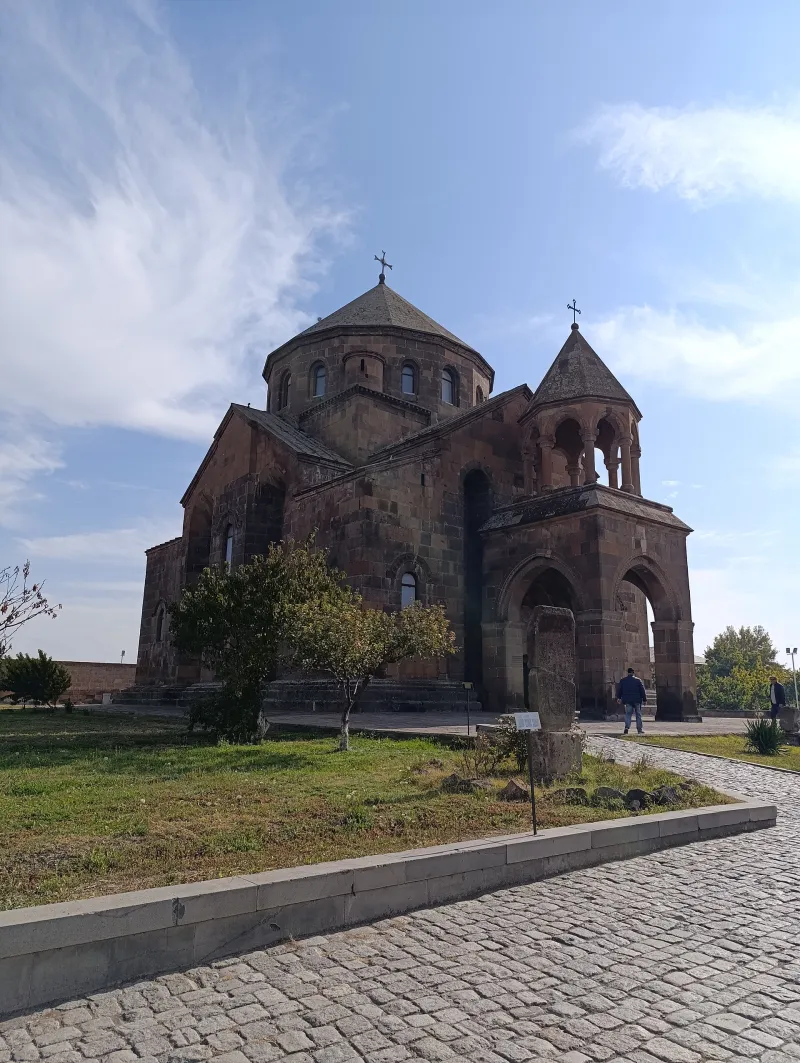
Saint Hripsime Church
ArmavirPerfectly proportioned church of 618 at the entrance to Vagharshapat, over the tomb of the martyr Hripsime (UNESCO).
Open Saint Hripsime Church →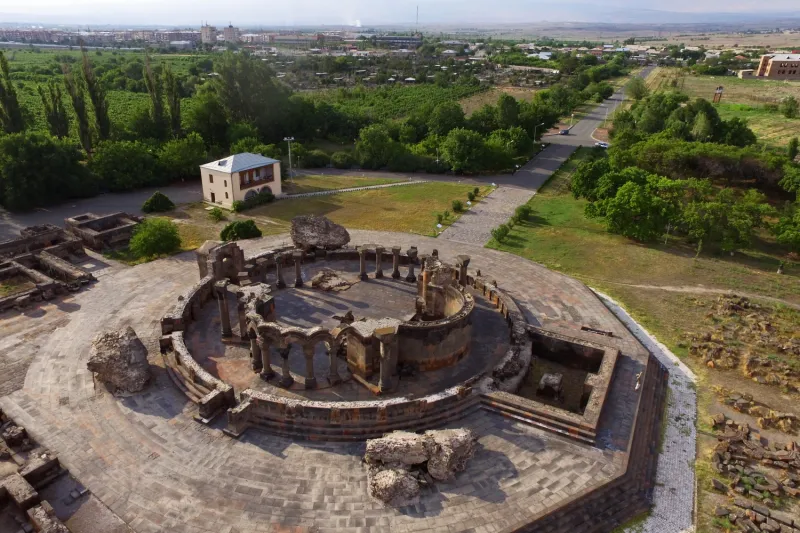
Zvartnots Cathedral
ArmavirRuins of a unique round 7th-century cathedral, with columns and carved capitals and Ararat behind (UNESCO).
Open Zvartnots Cathedral →Geghard and the Upper Azat Valley (2000)
Geghard is partly carved into the rock at the head of the Azat gorge. Its main church was completed in 1215; later in the 13th century churches and a family tomb were cut straight into the cliff. Sing or listen to a choir inside and the sound fills the stone. The Greco-Roman temple of Garni, lower down the same gorge, is not part of the listing but is a natural stop on the way.
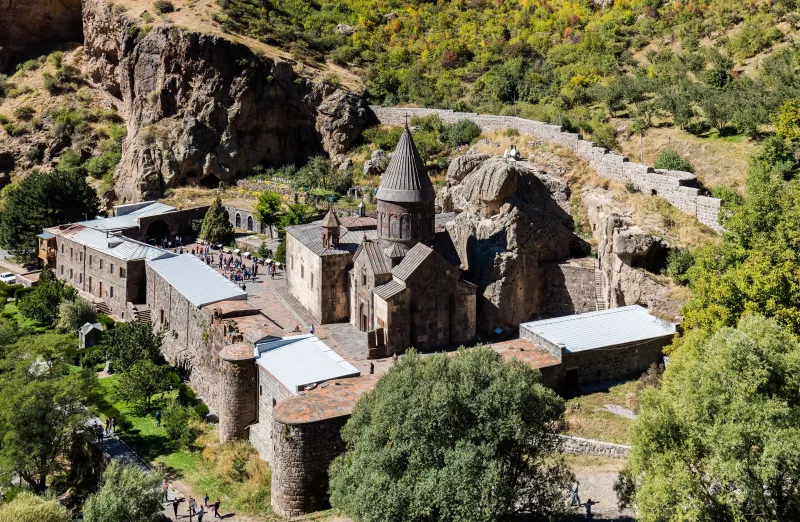
Geghard Monastery
KotaykUNESCO-listed monastery partly carved into the rock at the head of the Azat gorge, famous for its cave churches and acoustics.
Open Geghard Monastery →Haghpat and Sanahin (1996, 2000)
Haghpat was the first Armenian site inscribed, in 1996; Sanahin was added in 2000. Both grew from the 10th to the 13th century above the Debed canyon into great schools and centres of learning, with gavits, libraries and bell towers, and fine khachkars.
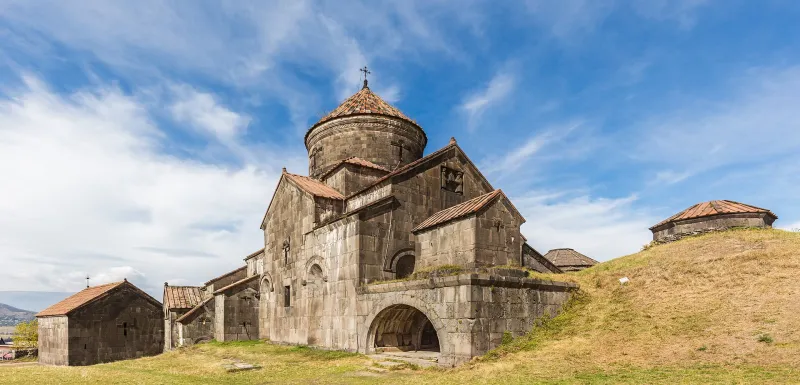
Haghpat Monastery
LoriUNESCO-listed 10th–13th-century monastery on a plateau above the Debed canyon, a great medieval centre of learning.
Open Haghpat Monastery →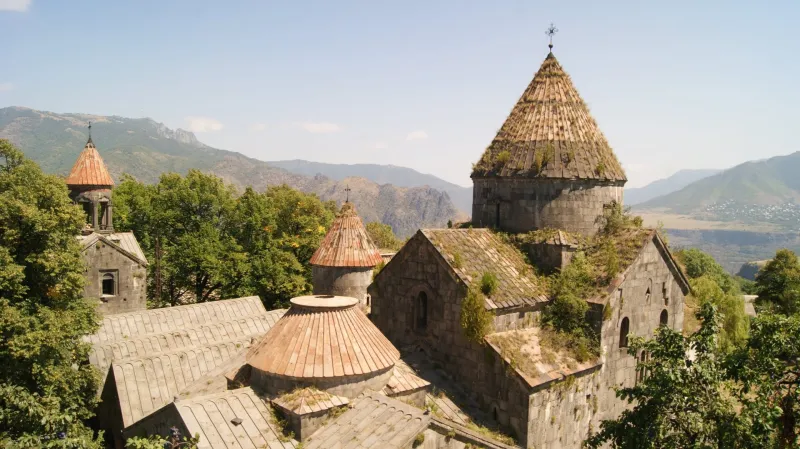
Sanahin Monastery
Lori10th–13th-century UNESCO monastery above Alaverdi, with dim halls of khachkars and a medieval library.
Open Sanahin Monastery →Living heritage
UNESCO also lists Armenian traditions as Intangible Cultural Heritage: the music of the duduk (proclaimed in 2005, inscribed in 2008), the craft and symbolism of khachkars — carved cross-stones (2010) — and lavash, the thin flatbread, “as an expression of culture in Armenia” (2014).
Plan your visits
- Etchmiadzin and Zvartnots are a half day from Yerevan: Etchmiadzin and Sardarapat in one day.
- Geghard pairs with Garni: Garni and Geghard in half a day.
- Haghpat and Sanahin are a long day trip or an overnight: a day in the Debed canyon.
- Churches are active: dress modestly and keep quiet during services.